
By Alicia Sisso Raz The version in Ḥaketía
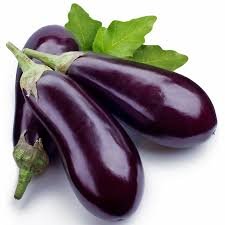
Almoronía, the traditional dish of the Moroccan Sephardim for the Se’uda Mafseket of Yom Kippur — the meal before the fasting starts– whose main ingredients are chicken and eggplant, is related to a variety of eggplant dishes, known in the Arab world by various names: ‘Burán’, ‘Baraniyya’, ‘Buraniye’, etc. The reason for it becoming the traditional Moroccan Jewry meal before this solemn day starts, is surprising, and not without a Talmudic twist.
It is recorded that eggplant dish had been originally served in the ninth century, at the wedding celebration of the Caliph of Baghdad, al-Mamun Abu al-Abbas Abdallah ibn Harun al-Rashid with Burán, a Persian princess. (Perry, 58).
Based on historical facts, these is how I can imagine the course of events could have happened: The Caliph, who wished to celebrate his wedding with great fanfare and extravagance, ordered his cooks to invent dishes, impossible to surpass by taste or presentation. The cooks, being aware of the alarming swiftness with which the Caliphas habitually use their swords, and for obvious reason, wanting to keep their heads and bodies intact, dedicated themselves to the mission at once.
The eggplant, native to India, has been considered a novelty back then, and it was cherished for its aphrodisiac qualities. Not surprisingly, the cooks decided in unison to create a new dish with eggplant. After all, considering its qualities, eggplant seemed to be the most suitable, constructive, and proper choice for a wedding night meal. Interestingly, eggplant is a contemporary emoji symbolizing lust!
Thus, eggplants had been rushed from India to the Caliph’s kitchen. The cooks prepared exceptionally tasty delicacies, but the eggplant dish was the jewel in the crown at the table. Luckily, the famous and sought-after qualities of the eggplant coupled with the unsurpassed mouth-watering taste pleased everyone, and the head of the cooks remained in its place, that is on the neck, just as our creator meant it to be…
The wedding celebration of the Caliph with Burán continued for forty days and nights. It had been stated that the excess luxury and expenditures during the celebrations “were impossible to surpass, and made the greatness of previous ceremonies trivial; pearls and precious stones were showered on the guests…” (Caswell, p. 116). And the newly delicious invented dish was named: Burán honoring the bride.
This eggplant dish was originally mentioned in Kitab al Tabikh, a thirteenth century cookbook byIben Muhammad Al Hassan Al Baghdadi (A recent version, A Baghdad Cookery, edited by Charles Perry is available in English). The dish became well-liked throughout the Muslim world; following the Arab conquest, it has spread around the Mediterranean and finally has reached Spain. It seems, however, that especially the Jews in Spain enthusiastically adopted the newly introduced vegetable. The following mocking rhymes by Rodrigo Cota, a fifteenth century poet, indicates how well-known and well-noted was the popularity of eggplant in the Sephardic cooking:
“At this Jewish wedding party
bristly pig was not consumed.
Not one single scaleless fish,
Went down the gullet of the groom,
instead, an eggplant casserole
with saffron and Swiss chard;…”(Gitlitz, p. 46)
The original dish, served in the al-Mamun wedding, has evolved throughout the years, and there is a variety of eggplant dishes, very popular around the Mediterranean: vegetarian, with chicken, with meatballs, with beef, etc.. Their various names stem from the princess’ name: Al Baraniya, Al Buroniye, and in some places, it is still called Burán.
Almoronía is the Moroccan Jewry name of its version. The most popular one consists of eggplant, chicken, caramelized onions, with spices and honey, cooked over a low flame with a lot of patience and for a long hour till it becomes marmalade-like in its sofrito (in its deliciously reduced and concentrated sauce). But an obvious question must be asked here. Why has the Almoronía, a dish whose main ingredient is the aphrodisiac eggplant become the traditional dish of the Moroccan Jewry for the Se’uda Mafseket of Yom Kippur. What is the reason for raising passion and desire, if lovemaking is prohibited on Yom Kippur?
Well, there is an explanation, albeit it requires us to delve into a Talmudic reasoning. The explanation was given to me by Ms. Rosette Shetrit, nee Asseraf, a distinguished lady born in Fez, as we could not stop our soulful laughter:
The Torah, as we all know, orders us to fast, to repent of our sins, to ask for pardon and to torture our souls on Yom Kippur! The more we torture our souls the better. Now, what could be a greater torture than having been induced with a desire for something and abstain from it, although the object of desire is nearby, available, and ready? Ve’initem et nafshoteḥem, (torture your souls) orders us the Torah, and we, the Moroccan Jewry, being utterly obedient and innocently faithful, comply with it with all our heart and enthusiasm!
The recipe in few words
Version # I
1. Peel and sprinkle with salt slices of eggplant, let them stand in a strainer for about 1/2 an hour, rinse, pat dry, brush with oil and bake (They were originally fried)
2. Over low flame sauté thin slices of onions, sprinkled with some cinnamon, nutmeg, turmeric, salt and some honey (or sugar), to golden. This part takes well over half an hour. Put aside.
3. In the same casserole sauté dark pieces of chicken or Cornish hen, seasoned as above.
4. Place 1+2+3 in a low rim casserole, mixing gently. Adjust spices to taste. Cook over a low flame for about 2 hours, mixing occasionally without adding water!
Version II
In this version the onions are replaced with red bell peppers and garlic, and the spices are replaced with mainly paprika and salt. It is another delicacy.
References
Al Hasan Al Karim, Muhammad B. A Baghdad Cookery Book: The Book of Dishes (Kitab al-Tabikh). Translated by Charles Perry. London: Prospect Books. 2005.
Caswell, F. Matthew. The Slave Girls of Baghdad: The Qiyan in the Early Abbasid Era. London: I.B. Tauris & Co. LTD. 2011.
Gitlitz, David M. and Linda Kay Davidson. A Drizzle of Honey: The Lives and Recipes of Spain Secret Jews. New York: St. Martin’s Griffin. 2000.
Shuraydi, Hasan. The Raven and the Falcon: Youth versus Old Age in Medieval Arabic Literature. Leiden and Boston: Brill. 2014.